
SURFACE TREATMENT

Black Oxide vs Zinc Plating: Choosing a Finish for Machined Steel Parts

Compare black oxide and zinc plating by corrosion protection, dimensional effect, appearance, threads, material condition and RFQ requirements.

SURFACE TREATMENTVIETTECH · TECHNICAL RESOURCES
01

Two finishes with different purposes

Black oxide and zinc plating are both used on steel parts, but their mechanisms and suitable applications differ. Black oxide forms a very thin conversion layer on ferrous material and normally relies on oil or a sealer for additional corrosion resistance. Zinc plating deposits metallic zinc onto steel, providing a barrier and sacrificial protection when minor damage exposes the substrate. Selection should therefore be based on function and environment, not color or price alone.
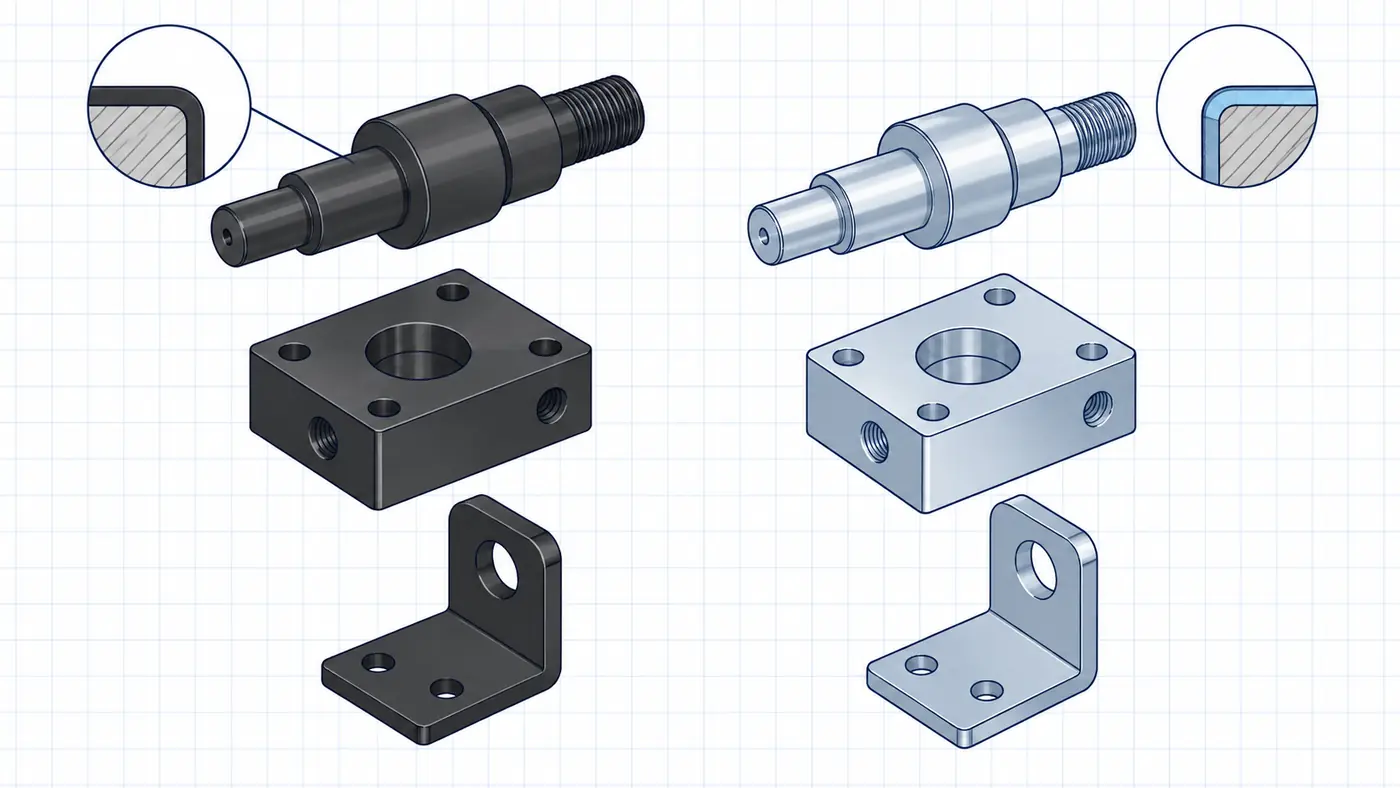
2D technical sketch comparing black-oxide and zinc-plated machined steel parts
The same machined part family shown with black oxide and zinc plating; coating thickness is not to scale.
  • Black oxide: matte dark appearance and minimal dimensional change
  • Zinc plating: generally stronger corrosion protection for common service conditions
  • Performance depends on preparation, coating system, supplementary treatment, geometry and environment
  • The drawing should identify the governing specification and treated areas
02

When to consider black oxide

Black oxide is often considered for fixtures, blocks, bushes, shafts, tools and machine components requiring a uniform dark finish without significant coating buildup. It should not be treated as a high-performance outdoor or chemical-environment coating. Corrosion behavior depends strongly on the oil or sealer, cleaning, packaging and actual service conditions. Precision fits and functional faces should still be reviewed individually rather than automatically processing every surface.

03

When zinc plating may be preferable

Zinc plating is commonly selected for brackets, plates, fasteners and steel assembly parts requiring more corrosion protection than black oxide typically provides. The supplementary treatment affects appearance and performance, so a drawing should define the coating system rather than simply stating zinc plate. Chemical exposure or unusually severe corrosion requirements call for a specific standard and validation test.

04

Coating thickness, fits and threads

Zinc plating adds material and can affect shaft diameters, bores, grooves, locating faces and threads. On threaded components, applicable thickness may be limited by dimensional class and fit; ISO 2081 explicitly notes this constraint. Tight features should state whether dimensions apply before or after plating and whether masking, process allowance or final gauging is required.

05

Hardness and hydrogen-embrittlement risk

Cleaning and electroplating steps can introduce hydrogen-embrittlement risk in certain high-hardness or highly stressed steel parts. Material grade alone is not enough to assess this risk: final heat-treatment condition, hardness, geometry and service load matter. When applicable, pre-treatment and post-coating requirements must be agreed with the plater under the governing specification. High-strength fasteners, springs and safety-related components should never receive an unapproved process.

06

Inspection beyond appearance

A uniform black color or bright plated surface is not sufficient acceptance evidence. Depending on the drawing, inspection may address coverage, appearance, thickness, adhesion, post-treatment dimensions, threads and corrosion testing. Substrate scratches or machining defects can remain visible after finishing, and coating does not correct burrs, roughness or geometric error from machining.

07

Drawing and RFQ checklist

Clear input prevents assumptions during process planning and quotation.

  • Material grade, standard and final hardness
  • Black oxide or zinc plating and governing specification
  • Supplementary treatment, color and Cr(VI)-free requirement where applicable
  • Coating thickness or service class
  • Coated surfaces, masked areas and acceptable contact points
  • Post-treatment tolerances and thread-gauging requirements
  • Tests, certificates, quantity and packaging requirements
08

How VietTech coordinates the work

VietTech performs CNC milling, CNC turning, grinding and wire EDM, then coordinates black oxide or zinc plating with suitable specialist partners. Coating requirements, masking, critical dimensions and inspection records are reviewed drawing by drawing. No universal thickness or corrosion rating is assumed; the route is confirmed only after material, geometry, tolerance, quantity and service information are available.

09

Conclusion

Black oxide suits parts needing a dark, very thin conversion finish with oil or sealing support. Zinc plating is generally the stronger choice when steel parts require more explicit corrosion protection, but thickness, threads, masking and hydrogen-embrittlement risk must be controlled. The correct finish follows the part function and drawing requirements rather than appearance alone.

RELATED PAGES

Nitriding vs carburizing ↗S45C vs SCM440 ↗Material and finish RFQ guide ↗

FAQ

Frequently asked questions

Does black oxide protect as well as zinc plating?

Generally no. Black oxide relies heavily on oil or sealing, while zinc plating usually offers stronger corrosion protection in common service environments.

Does zinc plating change dimensions?

Yes. Deposited thickness can affect shafts, bores, grooves, locating faces and tightly fitted threads.

Should threads be masked before plating?

It depends on thread class, thickness and function. Allowance, masking or post-plating gauging may be required.

Can heat-treated parts be zinc plated?

They may be, but hardness and hydrogen-embrittlement risk must be assessed and the pre- and post-treatment route approved.

Does VietTech perform finishing in-house?

No. VietTech coordinates qualified specialist partners and manages machining, masking, tolerances and required documentation for each order.

SURFACE TREATMENT

Need to select a finish for a steel part?

Send the 2D drawing, material, hardness, quantity, service environment and coating requirement for VietTech to review machining, finishing and inspection before quotation.REQUEST A QUOTE ↗