
MACHINING TECHNOLOGY

Wire EDM Explained: When Should It Be Used for Precision Parts?

A practical guide to wire EDM principles, suitable profiles, inside-corner limits and the information needed for an accurate machining quotation.

MACHINING TECHNOLOGYVIETTECH · TECHNICAL RESOURCES
01

How does wire EDM work?

Wire EDM uses a continuously travelling electrode wire and controlled electrical discharges to remove conductive material. The wire does not cut mechanically or touch the workpiece. With very low cutting force, the process is useful for through-profiles, heat-treated materials and parts that could distort under conventional cutting loads.
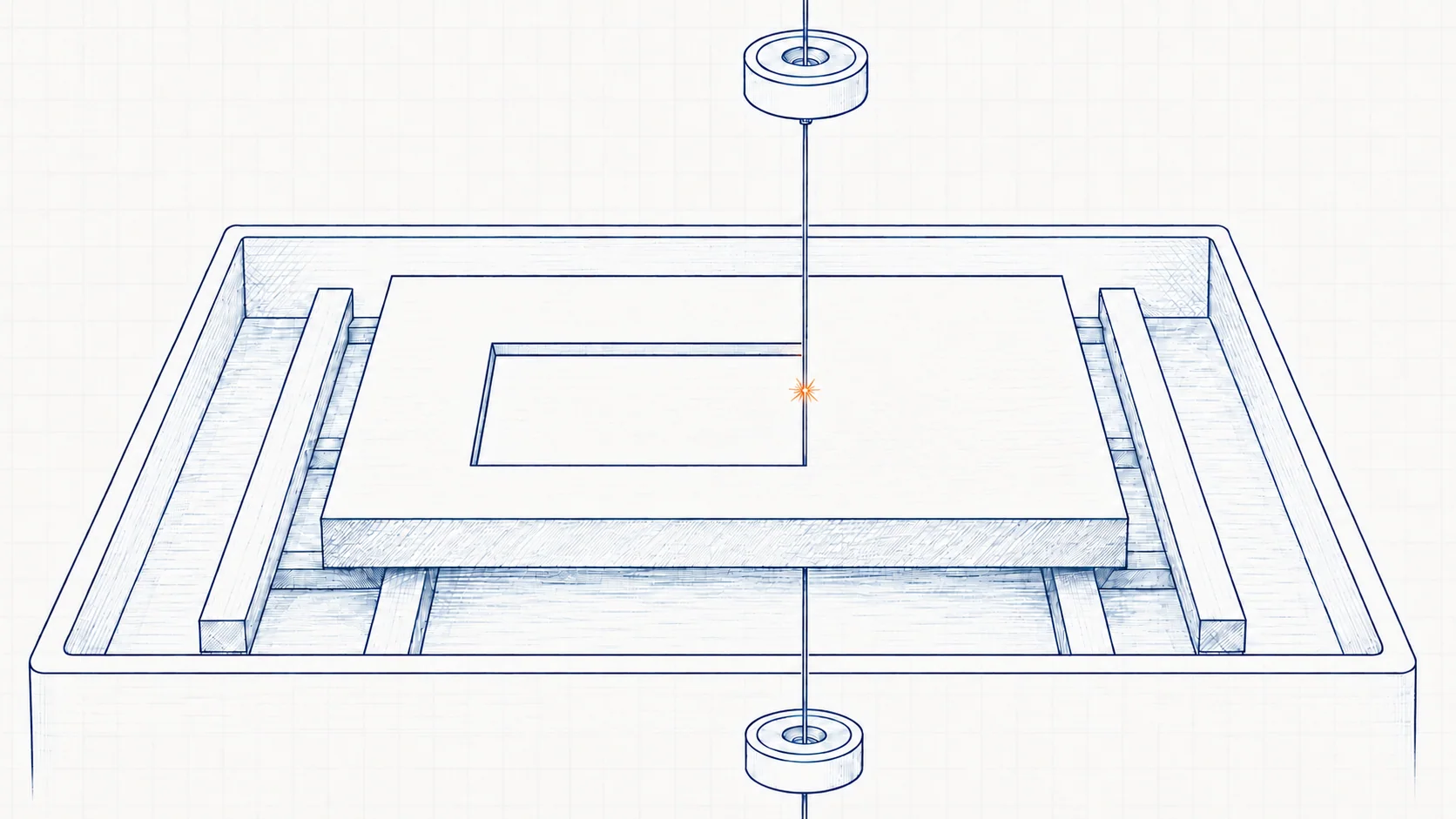
Wire EDM cutting a rectangular through-profile in a metal workpiece
The electrode wire passes through the workpiece and follows a rectangular path; discharges occur in the gap between the wire and the cut surface.
  • A rough cut removes most of the material
  • One or more skim cuts refine size and surface condition
  • The workpiece material must be electrically conductive
02

When should wire EDM be selected?

Wire EDM is effective when tool access is difficult or cutting force may deform the part. The final choice still depends on the complete drawing, workpiece height, tolerance, surface finish and quantity.

  • Closed holes or profiles passing through the workpiece
  • Narrow slots and inside corners requiring a small radius
  • Hardened steel and other conductive materials that are difficult to machine
  • Slender parts where cutting force must be minimized
03

When is CNC milling a better choice?

CNC milling is generally more economical for flat faces, blind pockets, 3D contours and parts requiring high material removal. Non-conductive materials cannot be wire-cut. A combined route is often suitable: mill the stock, drill the start hole, then use wire EDM only for critical profiles.

04

Start holes, slugs and retaining tabs

A closed profile needs a start point through which the wire can be threaded. Once the path is complete, the central material becomes a loose slug. It must be retained or removed in a controlled way to avoid wire breakage and surface damage. A small retaining tab may be left and removed in the final operation when appropriate.

05

Inside corners, workpiece height and taper

Wire EDM can produce a small inside radius, but not a perfectly sharp zero-radius corner. The actual radius depends on wire diameter, discharge gap and cutting conditions. For tapered cuts or profiles that change through the workpiece height, define the top and bottom geometry and taper angle so wire travel and accuracy can be assessed.

06

Tolerance, surface finish and inspection

Skim cuts influence size, wall straightness and surface condition. More passes should not be specified by habit because machine time and cost increase. VietTech reviews the functional characteristics on the drawing and selects suitable inspection equipment, including conventional gauges, a height measuring system or CMM.

  • Identify critical dimensions and tolerances
  • Apply surface-finish requirements to the correct faces
  • Define datums and the final inspection condition
  • State whether inspection reports or certificates are required
07

Wire EDM RFQ checklist

Clear inputs help the supplier assess the process, machine time and technical risks.

  • 2D drawing with tolerances, datums and surface finish
  • Material, supply condition and heat-treatment requirements
  • Prototype and batch quantities plus requested delivery
  • Workpiece height, minimum inside radius and taper requirements
  • Start-hole, slug and retaining-tab instructions if already defined
  • Inspection, documentation, packing and delivery requirements
08

VietTech review process

Before confirming a quotation, VietTech reviews the drawing, material, workholding references, wire path, slug control, cutting passes and inspection method. Achievable tolerance and finish are evaluated for each part rather than assumed from a single generic capability figure.

LANGUAGES

Wire EDM capability Quality and inspection RFQ guide

FAQ

Frequently asked questions

Can aluminium be cut by wire EDM?

Yes. Aluminium is conductive, although cutting conditions and surface-control methods depend on the alloy and geometry.

Can wire EDM create a perfectly square internal corner?

No. An inside corner retains a small radius from the wire diameter and discharge gap; the suitable value must be reviewed against the drawing.

Can a part be wire-cut after heat treatment?

Yes, provided the material remains conductive. This is a common use case for accurate profiles in hardened steel.

Are more skim cuts always better?

Not necessarily. The number of passes should meet the functional tolerance and finish because every added pass increases time and cost.

MACHINING TECHNOLOGY

Have a wire EDM part to review?

Send the 2D drawing, material, quantity, tolerances, surface finish and requested delivery date for VietTech to review the process and quotation.REQUEST A QUOTE