
TECHNICAL GUIDE

SUS303 vs SUS304: Which Stainless Steel for Precision-Machined Parts?

SUS303 and SUS304 are austenitic stainless steels commonly specified for shafts, bushings, fittings, brackets, housings and equipment components. Their app

TECHNICAL GUIDEVIETTECH · TECHNICAL RESOURCES
01

Overview

SUS303 and SUS304 are austenitic stainless steels commonly specified for shafts, bushings, fittings, brackets, housings and equipment components. Their appearance is similar, but their behavior during machining and in service is not the same. SUS303 is generally selected when machining productivity and chip control are priorities. SUS304 is usually preferred when corrosion resistance, forming or welding matters more. The two grades should therefore not be interchanged simply because both are called stainless steel.

02

The essential difference

SUS304 is a general-purpose chromium-nickel stainless steel. A chromium-rich passive film forms on its surface and provides corrosion resistance in many ordinary environments. SUS303 has a similar alloy base but contains added sulfur to improve cutting behavior. Sulfur-bearing inclusions help break chips during turning, drilling and threading. The trade-off is lower corrosion resistance and slightly lower toughness than SUS304. SUS303 prioritizes machinability; SUS304 offers a broader balance of fabrication and service properties. This table is a selection guide, not a substitute for the drawing, applicable material standard or service-environment assessment.

SUS303 vs SUS304: Which Stainless Steel for Precision-Machined Parts?
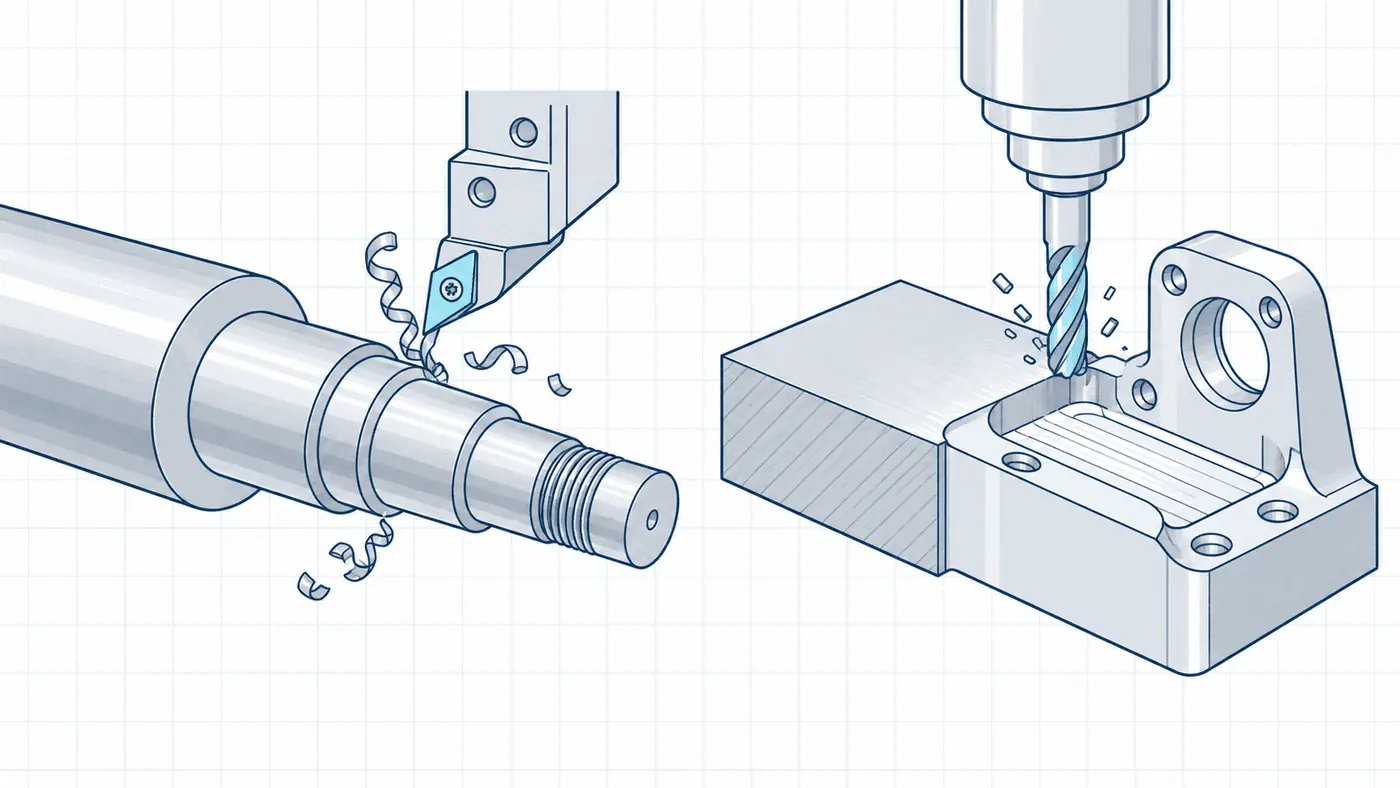
Technical diagram: SUS303 vs SUS304: Which Stainless Steel for Precision-Machined Parts?. This is not a production photograph; specifications and acceptance follow the drawing.
CriterionSUS303SUS304
Material typeFree-machining austenitic stainlessGeneral-purpose austenitic stainless
Key featureSulfur added for machiningLow controlled sulfur content
MachinabilityBetter chip controlMore prone to long chips and work hardening
Corrosion resistanceLower than SUS304Better in ordinary environments
WeldingNot normally the first choiceBetter suited than SUS303
Typical partsTurned shafts, bushings, threads, fittingsPlates, brackets, housings and welded parts
03

Why is SUS303 easier to machine?

More manageable chips

SUS304 can produce long, ductile chips that wrap around the tool or workpiece. If tooling, cutting parameters or coolant delivery are unsuitable, heat rises quickly and recutting chips can damage the surface. SUS303 generally produces shorter chips, making it attractive for repetitive turning, drilling and threading.

Lower machining difficulty—not automatic accuracy

Both grades can work-harden when rubbed by a dull tool or cut with insufficient feed. This effect is often more troublesome with SUS304. Nevertheless, final accuracy depends on part geometry, stock condition, rigidity, operation sequence, heat generation and measurement strategy. SUS303 can make the cutting process more stable, but it does not guarantee tight tolerances by itself.

04

When should SUS303 be considered?

SUS303 is useful for parts with extensive turning, multiple threads or holes, and relatively high production quantities when the service environment is mild. Examples include small shafts, spacers, bushings, fittings, pins and indoor mechanism components. It should not be selected automatically for chloride exposure, repeated contact with water or chemicals, food-contact requirements, or welded assemblies. In these cases, the designer should confirm the appropriate stainless grade for the actual environment.

05

When is SUS304 the better option?

SUS304 provides a practical balance of corrosion resistance, strength, formability and weldability. It is commonly considered for brackets, plates, housings, equipment components and parts used in ordinary humid environments. However, SUS304 is not immune to corrosion. Chlorides, temperature, crevices, surface roughness and iron contamination can damage its passive condition. Marine or aggressive chemical service may require a higher-alloyed stainless steel rather than a simple change from SUS303 to SUS304.

06

Machining considerations for SUS304

Maintain a positive cut

Use sharp tooling, rigid workholding and sufficient feed to cut rather than rub. Dwelling on the surface can create a work-hardened layer and increase tool wear during the following pass.

Control heat and evacuate chips

Coolant must reach the cutting zone. Pocket milling, deep drilling and grooving require a clear chip path so chips do not recut or scratch finished surfaces.

Separate roughing and finishing

Thin or asymmetric parts may move after heavy stock removal. A planned roughing and finishing sequence allows the part to stabilize before critical datums and dimensions are completed.

Prevent iron contamination

Fixtures, benches or abrasives shared with carbon steel can deposit free-iron particles on stainless surfaces. If cleaning or passivation is required, it should be stated on the drawing or RFQ.

07

Can SUS303 replace SUS304?

Only with approval from the designer or customer. A substitution may reduce machining time but can change corrosion resistance, welding behavior and suitability for the intended service. For build-to-print work, VietTech uses the specified material or requests written confirmation before applying an alternative. An RFQ should state the material standard, product form, certificate requirement, surface condition, welding requirement and service environment where relevant. This prevents a quotation based on one stainless grade from being applied to a part that needs the properties of another.

08

Machining stainless parts at VietTech

VietTech manufactures build-to-print components using CNC milling, CNC turning, grinding and wire EDM as appropriate to the geometry and technical requirements. Inspection planning follows the critical dimensions, datums and tolerances shown on the drawing. Surface treatment or specialist operations, where requested, are coordinated with suitable partners and checked according to the order requirements. Actual feasibility depends on part size, tolerance, quantity, material availability and inspection requirements. VietTech does not apply one universal machining condition to every stainless-steel component.

09

Internal-link suggestions

  • S45C vs SCM440 material guide.
  • Thin-wall CNC machining article.
  • Flatness vs parallelism article.
  • VietTech capabilities: /#capabilities
  • Contact/RFQ: /en/contact
010

日本語版

メインキーワード: SUS303 SUS304 違い

RELATED PAGES

SUS304 vs SUS316: Which Stainless Steel Should You Choose for CNC Machined Parts? ↗Stainless Steel Passivation vs. Electropolishing: What Is the Difference? ↗

FAQ

Frequently asked questions

Is SUS303 corrosion resistant?

Yes, but its corrosion resistance is generally lower than SUS304 because sulfur is added to improve machinability.

Is SUS304 harder to machine than carbon steel?

Usually yes. It is ductile, retains heat in the cutting zone and can work-harden, so suitable tooling, rigidity, parameters and coolant are important.

Which grade is better for a high-volume threaded part?

SUS303 may improve machining productivity in a mild environment. If corrosion resistance or welding is critical, service requirements should take priority and SUS304 may be more appropriate.

Is SUS304 completely non-magnetic?

Magnet testing alone should not be used to identify the grade. Austenitic stainless steel can develop some magnetic response after cold work or deformation.

What should an RFQ include?

Provide the 2D drawing, 3D model if available, material grade and standard, quantity, tolerances, surface requirements, certificate and inspection requirements, and requested delivery timing.

TECHNICAL GUIDE

Request a VietTech review

Need SUS303, SUS304 or another stainless-steel part manufactured to your drawing? Send the drawing, quantity, tolerances and service requirements. VietTech will review manufacturability, the machining route and the inspection approach before providing a quotation. ---REQUEST A QUOTE ↗