
SURFACE TREATMENT

Electroless Nickel vs Hard Chrome: Which Coating Fits a Machined Part?

Compare electroless nickel and hard chrome by coating uniformity, wear, corrosion, machining allowance and final inspection.

SURFACE TREATMENTVIETTECH · TECHNICAL RESOURCES
01

The coatings are not direct substitutes

Electroless nickel and hard chrome both improve metal surfaces, but their deposition methods and preferred applications differ. Electroless nickel is deposited by a chemical reaction and can follow complex geometry more uniformly than conventional electroplating. Hard chrome is an electrolytic coating commonly considered for sliding surfaces, journals and wear zones requiring a hard working layer or dimensional restoration.
2D comparison of electroless nickel and hard chrome plating
Electroless nickel follows complex geometry; hard chrome is shown selectively applied and ground on a shaft journal.
  • Electroless nickel: relatively uniform coverage over accessible edges, bores and recesses
  • Hard chrome: suited to working surfaces that may be ground after plating
  • Do not select by color or brightness alone
  • Define substrate, environment, thickness and final tolerance
02

When electroless nickel fits

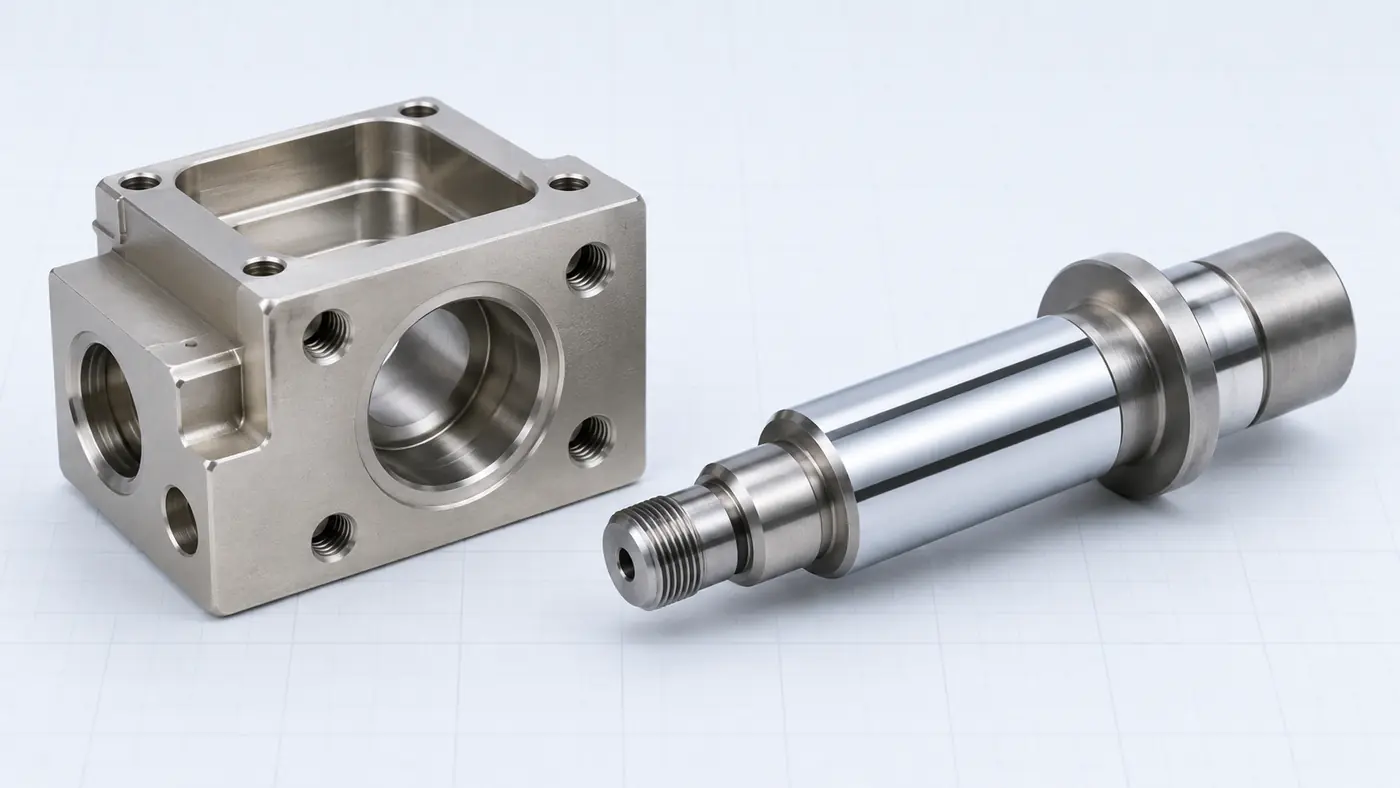
It is often considered for components with multiple faces, holes, grooves or complex geometry where relatively consistent thickness matters. Corrosion and wear performance depend on coating chemistry, thickness, substrate preparation and post-treatment. Blocks, housings, plates, mould parts and components requiring multi-face coverage are typical candidates. Deep blind holes and trapped-air regions still need specific review.

03

When hard chrome fits

Hard chrome is commonly used on rods, pistons, guides, journals and sliding or wear surfaces. A thicker deposit may provide allowance for cylindrical grinding or polishing to final size and roughness. Thickness distribution around edges, grooves and section changes may vary, so racking, auxiliary anodes, masking and allowance must be reviewed by the coating specialist.

04

Functional selection guide

Start with service conditions and the finishing route.

  • Complex geometry and multi-face coverage: consider electroless nickel
  • A journal or sliding diameter to be ground after coating: consider hard chrome
  • Corrosion is primary: specify the nickel system, thickness and relevant test
  • Wear or diameter restoration: hard chrome may be an option
  • Food, chemical or regulated use: verify the applicable standard rather than relying on the coating name
05

How thickness changes dimensions

A coating adds material to every treated surface. An outside diameter generally increases by approximately twice the coating thickness when opposite sides receive similar deposits; a bore reduces on the same principle. Actual distribution depends on geometry and process. Drawings should state whether tolerances apply before or after plating, which areas are masked and where thickness is measured.

06

Substrate preparation and post-finishing

Tool marks, pits and sharp edges in the substrate can affect the coating. Machining, edge preparation and cleaning must be suitable before treatment. Tight roughness or dimensional requirements may require grinding, honing or polishing after plating. Grinding hard chrome needs suitable wheels, parameters and coolant to avoid overheating, cracking or delamination.

07

Inspection after treatment

Final inspection may include dimensions, coating thickness, adhesion, appearance, hardness, roughness and corrosion testing as specified. Thickness measurement must suit the substrate and coating. Masked areas, threads, fits and measurement datums should be identified before processing.

08

RFQ checklist

Complete input prevents quotations based on assumptions.

  • Controlled 2D drawing and 3D model if available
  • Substrate, heat treatment and pre-plate hardness
  • Coating type, standard and thickness range
  • Coated, masked, threaded and bored areas
  • Final tolerances, roughness and acceptance state
  • Surfaces to be ground and planned allowance
  • Certificate, adhesion or corrosion-test requirements
  • Quantity and requested delivery
09

VietTech coordination scope

VietTech performs CNC machining, grinding and inspection to drawing. Electroless nickel and hard chrome are coordinated through suitable specialist partners. VietTech reviews pre-plate dimensions, masking, finish allowance and post-treatment inspection before confirming feasibility.

RELATED PAGES

Black oxide vs zinc plating ↗Grinding after heat treatment ↗Surface roughness Ra ↗

FAQ

Frequently asked questions

Is electroless nickel perfectly uniform in every hole?

No. Geometry, solution exchange and trapped gas can still affect coverage.

Must hard chrome be ground afterward?

It may be required for tight diameter, roundness or roughness; the deposit must include sufficient grinding allowance.

Is “nickel plate” a complete drawing note?

No. State electroless or electrolytic nickel, the standard, thickness and functional requirements.

Do tolerances apply before or after plating?

The drawing should say. Functional dimensions generally need acceptance in the final finished state.

Does VietTech plate in-house?

No. VietTech coordinates specialist partners and controls the related machining, allowance and inspection.

SURFACE TREATMENT

Need a coating route reviewed?

Send the drawing, substrate, quantity, coating type, thickness and final tolerances for VietTech to review machining and surface-treatment coordination.REQUEST A QUOTE ↗