
SURFACE TREATMENT

Type II vs. Type III Anodizing: Which Finish for a Machined Aluminum Part?

Compare Type II and Type III anodizing for CNC aluminum parts, including coating thickness, color, wear resistance, masking, and tolerance effects.

SURFACE TREATMENTVIETTECH · TECHNICAL RESOURCES
01

Overview

Anodizing is an electrochemical process that forms an aluminum oxide layer on an aluminum surface. The layer is integral with the substrate and can improve corrosion resistance, surface durability, dye acceptance, and electrical insulation. Two common drawing requirements are conventional sulfuric acid anodizing, generally identified as Type II under MIL-PRF-8625, and hardcoat anodizing, generally identified as Type III. The distinction is not limited to coating thickness. Intended function, color, sealing, wear performance, and dimensional impact are also different. An unsuitable specification may tighten bores, interfere with threads, create unexpected color variation, or add cost without improving the part's function.

02

What is conventional Type II anodizing?

Conventional sulfuric acid anodizing produces a relatively thin, porous oxide before sealing. The pore structure can accept dyes, making Type II suitable for black, blue, red, or other colors available from the finishing supplier. For mechanical components, Type II is commonly selected for general corrosion resistance, product identification, industrial appearance, and a degree of electrical insulation. The drawing should state the applicable specification, type, class or color, thickness when critical, and sealing requirement. The word “anodize” alone is not enough for a controlled result.

Type II vs. Type III Anodizing: Which Finish for a Machined Aluminum Part?
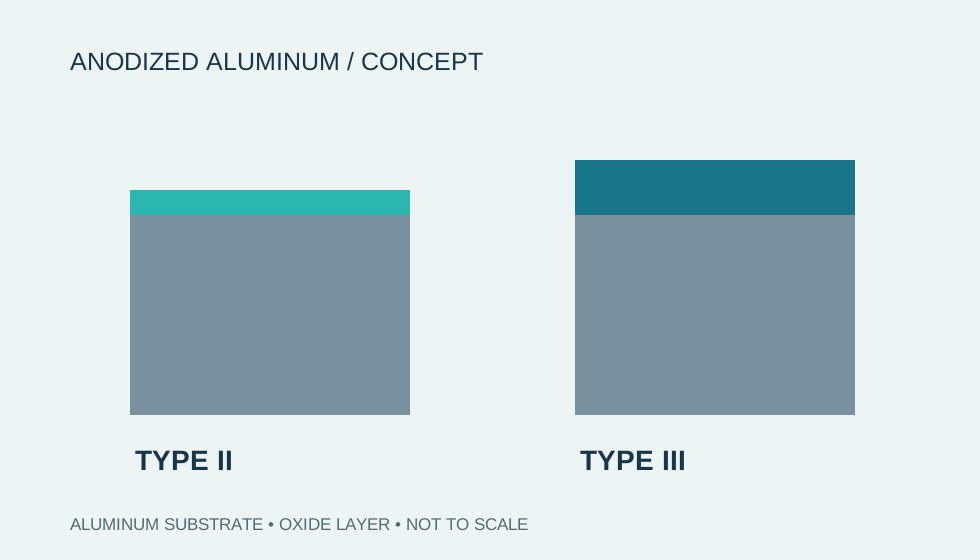
Technical diagram: Type II vs. Type III Anodizing: Which Finish for a Machined Aluminum Part?. This is not a production photograph; specifications and acceptance follow the drawing.
03

What is Type III hardcoat anodizing?

Hardcoat anodizing commonly uses sulfuric acid under tightly controlled conditions to form a thicker and harder oxide. It is used on sliding, guiding, or repeatedly contacted surfaces where improved wear resistance is important. Type III does not guarantee a uniform black cosmetic finish. Its natural color may range from gray to dark gray depending on alloy and thickness. Dyeing and sealing must be specified when required because these operations can affect appearance, corrosion performance, and wear behavior.

04

Quick comparison

These are selection guidelines. The governing specification, thickness, and test requirements must come from the product drawing or purchase specification.

CriterionType II anodizingType III hardcoat anodizing
Primary objectiveGeneral corrosion resistance, appearance, colorWear resistance, working surfaces, electrical insulation
ThicknessGenerally thinner; controlled by the drawingGenerally thicker; selected for function and drawing requirements
ColorWider range of dyed colorsNatural color varies by alloy; color options are more limited
SealingCommonly used for corrosion resistance and dye retentionSealed or unsealed depending on corrosion and wear priorities
Dimensional impactMust be considered for fits, threads, and close tolerancesGreater dimensional impact; buildup requires close control
Typical partsHousings, plates, brackets, identification componentsGuides, sliding features, contact surfaces, wear components
Cost and lead timeGenerally lowerGenerally higher due to tighter process and thickness control
05

How does anodizing affect dimensions?

The oxide grows partly into the aluminum substrate and partly above the original surface. Dimensional buildup should therefore not be assumed to equal the entire coating thickness on each surface. The growth ratio varies with alloy and finishing process. External diameters tend to increase. Bores, slots, and internal threads tend to lose clearance because coating grows from opposing surfaces. This effect is especially important for dowel holes, bearing fits, sliding grooves, and small threads. The drawing should clearly identify which dimensions apply before finishing and which must be met after finishing. Common control methods include: Threads should not be chased and surfaces should not be polished after anodizing without approval, because the protective layer would be locally removed.

  • Pre-compensating machining dimensions.
  • Masking threads, bores, datum surfaces, or electrical-contact areas.
  • Defining post-finish tolerances and agreeing on a target thickness with the anodizing supplier.
06

When should each type be selected?

Select Type II when

- Color or controlled industrial appearance is important. - General corrosion protection is the primary requirement. - The surface is not exposed to significant sliding wear. - A thinner coating or masking can support the required tolerance.

Select Type III when

- The part includes sliding, guiding, or repeated-contact surfaces. - Improved wear resistance is required on aluminum. - The design needs a thicker electrical-insulating layer. - Coating thickness, color, sealing, and dimensional effects have been addressed. Type III should not be specified only because it is called “hardcoat.” When a part primarily needs color, general corrosion resistance, and lower cost, Type II is often the more suitable choice.

07

Effects of alloy and machined surface condition

Alloy chemistry influences natural color, coating formation, and visual uniformity. Even with the same dye, different alloy grades or material lots may show color variation. Cosmetic requirements should therefore include an approved limit sample or a clearly defined acceptance range when appearance is critical. Anodizing does not hide machining marks, scratches, burrs, or substrate defects. Milled, turned, ground, polished, and bead-blasted surfaces will look different after processing. If bead blasting is required, the media, finish level, and excluded areas should be defined.

08

Information required in an RFQ

  • Aluminum grade and temper, such as A6061-T6 or A7075-T6.
  • Anodizing specification and type: Type II, Type III, or another standard.
  • Class or dye requirement, target color, and approved color sample when applicable.
  • Coating thickness and thickness tolerance.
  • Sealing requirement.
  • Masking areas: threads, fits, datum surfaces, and electrical contacts.
  • Permitted electrical contact or rack-mark locations.
  • Dimensions and tolerances that apply after finishing.
  • Test, certificate, and coating-report requirements.
  • Cosmetic acceptance criteria and permitted color variation.
09

Inspection after anodizing

Depending on the drawing, inspection may include visual condition, coating thickness, post-finish dimensions, fit verification, and masking condition. Corrosion or abrasion tests should be required only with a defined standard and test method. VietTech performs CNC machining and dimensional inspection. Anodizing is coordinated through specialist surface-treatment partners. Before production, VietTech reviews close-tolerance features, threads, fits, electrical-contact surfaces, and rack-mark locations to align machining compensation and masking requirements.

RELATED PAGES

6061 vs. 7075 aluminum ↗Stainless passivation vs. electropolishing ↗Materials and treatments ↗

FAQ

Frequently asked questions

Is hardcoat anodizing always black?

No. Natural color depends on alloy and coating thickness. Black requires a compatible dye process or an agreed color requirement.

Should threads be masked?

It depends on thread size, coating thickness, and assembly requirements. Small or close-fitting threads should be evaluated for masking or dimensional compensation.

Does the full anodizing thickness add to the part dimension?

It should not be assumed. Oxide grows both inward and outward, and actual buildup depends on alloy and supplier process data.

Can a part be accepted based only on pre-anodize dimensions?

Only when the drawing defines those dimensions before finishing. Functional features specified after anodizing must be verified in the finished condition.

Does anodizing hide machining marks?

No. Anodizing may provide uniform color, but tool marks, scratches, and substrate defects may remain visible.

SURFACE TREATMENT

Have an aluminum part that requires anodizing?

Send the drawing, alloy, anodizing type, thickness, color, masking zones, quantity, and inspection requirements for process review and quotation.REQUEST A QUOTE ↗